A Simple Formula to Ship Startups
This is for the founder, the maker, the builder who doesn't want a forty-step framework. Who wants the actual shape of the thing. It's the formula I used to build AppGaps, and it cuts straight through the noise: from a personal problem to a product that serves a community.
It comes down to one idea.

The formula
At its core, the whole thing is four steps:
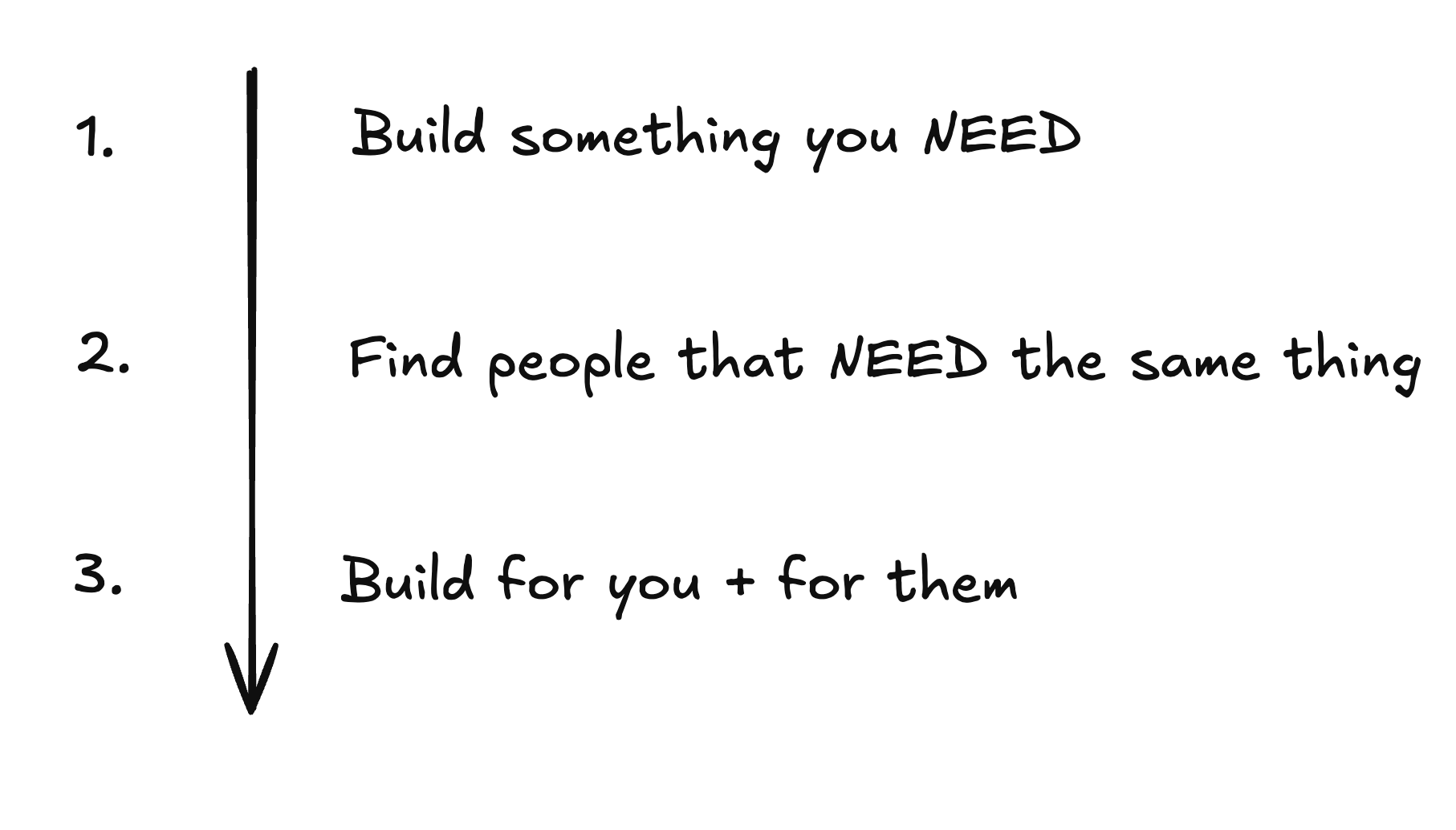
- Build something you NEED.
- Find and share your vision with people who NEED the same thing, and go to wherever they already hang out online.
- Build for you and for them.
- Iterate, and compete.
That's it. The rest of this is just unpacking each one into something you can actually do tomorrow.
Why it works
Three reasons, and they're not motivational, they're structural.
Authenticity. When you build something you genuinely need, you're automatically passionate and informed about the problem. You can't fake that, and you don't have to.
A built-in first user. You're user number one, which makes feedback and iteration absurdly fast. No surveys, no guessing. You just check whether it solved your problem this morning.
Empathy. You know the pain because you've felt it. That lets you build for your future customers on a level that someone chasing a market trend never reaches.
Level 1: Build something you NEED
The mission: find a recurring frustration in your own life. That's the seed.
For one week, become a problem-hunter. Every time you catch yourself thinking I wish there were a better way to do this or this tool is so frustrating, write it down. At the end of the week, pick the one that bothers you most. The one you'd work on even if it never made a dime.
Then build version 0.1, for an audience of one. A script. A scrappy app. A Notion template. A duct-taped prototype. The goal isn't polish, it's a working solution to your problem.
Don't filter early. The "stupidest" personal problems regularly turn into the best businesses. Focus on the core function and nothing else: what's the absolute minimum that makes the pain go away?
the dumb ideas are often the good ones
Level 2: Find people who NEED the same thing
The mission: prove you're not the only one. Find the people who share your problem.
Go where they already are, the specific subreddits, Discords, forums, the corners of X where your kind of person lives. And here's the move most people get backwards: lead with the problem, not the solution. Start conversations like how do you all deal with X? or does anyone else find Y maddening? and watch the response.
Once you've confirmed the pain is shared, then reveal what you built. Frame it small: I made this little tool to help me with this, anyone else find it useful? Listen more than you talk. You're hunting for the people who say yes, I have that exact problem. Their early feedback is a gift; treat criticism as fuel.
Level 3: Build for you + for them
The mission: evolve your personal hack into a product that serves the community, without drifting from the original problem.
Open a direct line to your first users, your founding members. A private Discord channel, a Telegram group, an email thread, whatever's lightest. Then prioritize the overlap: features both you and they need. Use "me + them" as the filter on every request that comes in. Make those early users feel like co-creators, because they are, and people protect what they helped build.
It's completely fine to say no. Saying no to requests that pull away from the core is most of the job. The aim is to be the perfect solution for a small, devoted group, not a mediocre one for everybody.
The final boss
- Start with a real, personal need.
- Validate that others share it.
- Build in public, with your community.
- Live at the intersection of what you need and what they need.
The most successful startups are born from a founder's genuine frustration. If you're not passionate enough to solve the problem for yourself, you won't have the stamina to solve it for everyone else.
With love, Ross.